
AI Brand Guidelines
Guidelines for the Use of AI-Generated and AI-Assisted Visual Content in Marketing & Advertising
Purpose
To ensure TWU official visual communications reflect authenticity, accuracy, and trust, while responsibly leveraging emerging AI tools to support—not replace—human judgment and real university experiences.
Scope
These guidelines apply when AI-generated or AI-assisted visuals are created for official TWU marketing, advertising, recruitment, websites, social media, print, video, or other promotional communications. They also apply to employees, students, contractors, and vendors creating this content for TWU.
They do not cover academic, instructional, research, administrative, or other AI uses outside Marketing & Communications.
Guiding Principles
Authenticity first
All marketing imagery and video must represent real people, real places, and real experiences whenever possible. AI must not be used to fabricate factual representations of University life.
Transparency builds trust
Audiences should never be misled about what is real versus AI-generated.
AI is a tool—not a substitute
AI may assist creative work but cannot replace genuine TWU storytelling. Human judgment, review, and accountability remain required for all official TWU content.
Always review before publishing
Before publishing, check that the content is accurate, accessible, on-brand, and appropriate for the intended audience. AI-generated content should never be published without meaningful human review.
Protect private information
Use only AI tools allowed by TWU for the intended use. Do not upload confidential, sensitive, or personally identifiable TWU information unless the tool is approved for that type of information and you have permission to use it.
Official TWU Branding & AI
AI tools may not be used to generate, recreate, modify, distort, or imitate the official TWU logos, logomarks, seals, athletics marks, wordmarks, mascot marks, or other protected brand assets.
- All AI-generated or AI-assisted materials must follow the same TWU brand guidelines for style, color, and brand voice as any TWU promotional materials.
- You may prompt AI to use the official TWU Maroon color values for design concepts, such as TWU PMS, Hex, or RGB mixes, but final colors must be verified against current TWU brand standards.
- Use only fonts permitted by TWU brand standards and their license terms. Do not upload proprietary font files into an AI tool or use AI to imitate a licensed typeface.
- Montserrat or another approved substitute font that closely matches the official TWU fonts may be used when allowed by current TWU brand standards.
- Official TWU marks may be added only from approved source files, using standard design tools, and in accordance with Marketing & Communications approval requirements. Do not ask AI to redraw or regenerate a TWU mark.
Approved Uses of AI Imagery
AI-generated or AI-assisted imagery may be used only in limited, low-risk contexts, subject to these guidelines:
- Conceptual or illustrative graphics (non-photorealistic)
- Minor edits to existing TWU photos or video – such as cropping, resizing, color or lighting correction, background cleanup, or removal of incidental objects – that do not materially change a person, event, place, or factual context.
- Creative ideation and internal mockups
- Abstract or metaphorical visuals that are clearly illustrative and do not purport to depict an actual TWU person, place, event, program, or outcome.
Requirements:
- Must not portray a real person as saying, doing, endorsing, or experiencing something that did not occur.
- Must not misrepresent university offerings, facilities, events, research, rankings, accreditation, outcomes, or other factual claims.
- Use only images, video, fonts, logos, and other source material that TWU owns or has permission to use.
- Marketing & Communications may ask that content be corrected, replaced, labeled, or removed if it does not follow these guidelines.
Restricted Uses (Require Additional Review)
The following uses require written Marketing & Communications approval before publishing: Marcomdesign@twu.edu
- Any fully AI-generated visual
- AI-enhanced photos or video that materially alter an identifiable person, TWU facility, event, classroom, laboratory, clinical setting, or other real-world context
- AI-generated or materially AI-assisted visuals for paid advertising or recruitment campaigns; the approval request must identify the AI tool and the nature of the AI use
- Visuals involving minors, health care or clinical settings, safety-sensitive activities, or an identifiable person’s likeness
- If a project raises questions about copyright, trademarks, privacy, use of someone’s image or voice, endorsements, or another legal issue, Marketing & Communications may consult the Office of General Counsel as needed
Prohibited Uses
AI-generated imagery may NOT be used in the following ways:
- Photorealistic images or video that depict fictitious TWU students, faculty, staff, patients, visitors, or other people as if they were real
- Simulated or materially altered TWU campus scenes, buildings, classrooms, laboratories, events, or facilities presented as real
- Fabricated clinical, health care, research, safety, academic, or student-life experiences presented as actual TWU activities
- AI-generated headshots, official portraits, or digital replicas of identifiable people, unless an exception is approved in writing by Marketing & Communications
- Generating, modifying, imitating, or distorting official University logos, marks, seals, wordmarks, athletics marks, mascot marks, or other protected brand assets
- Creating fake quotations, testimonials, endorsements, reviews, rankings, accreditations, program offerings, statistics, outcomes, or other claims that could mislead the public
- Use of an AI tool or technology that is prohibited or restricted by TWU or the State of Texas
- Uploading confidential, restricted, personally identifiable, student, employee, patient, unpublished, proprietary, or unlicensed third-party content to an AI tool that is not approved for that data and use
- Barn owls only, no horn owls!
Disclosure Requirements
When AI-generated or materially AI-altered imagery is used externally:
- Include a clear and conspicuous disclosure when the AI use is material or when omission could reasonably mislead the audience:
- “Image created using artificial intelligence”
- or “AI-assisted visual”
- or toggle the AI label for social media
- When disclosure is required, place it in a visible caption or credit reasonably close to the visual. A platform label may supplement the disclosure. Do not rely solely on alt text to disclose AI use.
Routine edits such as cropping, resizing, ordinary color correction, or other non-substantive retouching generally do not need an AI disclosure if they do not change the subject or factual context. Alt text should still accurately describe the visual.
Review & Approval Process
All AI-generated or AI-assisted imagery proposed for official TWU use must:
- Receive it for accuracy, context, bias, accessibility, and brand fit.
- Receive written Marketing & Communications approval for any restricted use identified in Section 4.
- Be evaluated for:
- Accuracy and truthfulness
- Brand alignment
- Copyright, trademark, publicity/likeness, endorsement, and other legal risk
- Accessibility standards
- AI use disclosure
- Privacy, information security, and use of an approved AI tool
- For restricted uses, retain sufficient documentation of the source assets, AI tool used, material AI editing instructions, approval, and disclosure in accordance with applicable records-retention requirements.
Legal & Ethical Considerations
- Use only source material that TWU owns, has licensed, has permission to use, or may otherwise lawfully use.
- Review outputs for stereotypes, bias, discriminatory implications, and inaccurate representation of people or communities.
- Do not put FERPA-protected, employee, patient or health, confidential, or other protected information into an AI tool.
- The TWU unit publishing the content remains accountable for the final work. Using AI does not replace human review.
- Verify facts – especially rankings, accreditation, program offerings, statistics, and outcomes – before publishing. Cite the source and year for rankings and statistics when appropriate.(-WSJ 2026, -Newsweek 2026, -USNWR 2026)
- Do not create or materially alter an identifiable person’s likeness, voice, testimonial, or actions without appropriate written authorization and any required Marketing & Communications or legal review.
Best Practice Recommendations
- Prioritize real photography whenever possible. Official TWU photography can be found here.
- Use AI to enhance creativity, not to fabricate reality
- When in doubt, choose transparency over convenience
Quick Reference (Do/Don’t)
DO
- Use approved AI tools for concepts, clearly illustrative visuals, and non-substantive edits
- Disclose material AI use when required
- Get approval before publishing
- Keep visuals aligned with actual TWU experiences
DON’T
- Create fake people or synthetic “real-life” TWU scenes
- Fabricate or materially distort people, programs, places, claims, or outcomes
- Generate, imitate, or alter official TWU branding
- Upload protected data to an AI tool
- Skip required review or disclosure
Bottom Line
If it looks real, it must be real.
AI should support the story—not become the story.
Social Media Usage
Here is why using unedited AI is considered a bad practice:
Algorithms "Shadow-Demote" AI Content
- Detection is Instant: Major platforms now use advanced "Intelligence Cores" that scan for AI patterns in text and metadata the moment you hit post.
- The Reach Penalty: To keep feeds from being flooded with "AI Slop," algorithms often downgrade the visibility of posts identified as purely AI-generated. If the system flags your content as low-effort automation, it may never reach the "Explore" or "For You" pages.
- Mandatory Labeling: Platforms now enforce transparency labels. If you don't disclose AI use and the algorithm catches it, your account’s overall "trust score" can be penalized, leading to long-term drops in organic reach.
User Engagement Crashes
- The "Uncanny Valley" Effect: As AI use has scaled, users have developed a "sixth sense" for it. Engagement is shifting away from high-volume posting toward visible human effort.
- Interchangeable Content: Purely AI posts often feel generic and interchangeable. Because they lack a unique "voice" or lived experience, users are less likely to comment, share, or save them—the three "high-value" signals that tell the algorithm to boost your post.
- Follower Fatigue: Research shows that once a follower suspects an account is over-automating its voice, they stop treating it like a person and start treating it like a bot, leading to higher unfollow rates and lower "deep" engagement (DMs and shares).
The Trust & Authenticity Gap
- Perception Statistics: In recent studies, suspicion of AI use jumped from 13.8% in human-led groups to over 40% when AI tools were used.
- Authenticity = Currency: In 2026, "Proof of Life"—content that proves a real human wrote it through personal perspective and observable effort—is the only way to break through the noise.
Best Practices
If you are going to use AI, the research suggests a "nuanced" approach to stay authentic:
- Inspiration, Not Substitution: Use AI for ideas or "conversation starters," but write the final post yourself.
- The "Human Polish": Use AI to help revise a draft you already wrote, rather than letting it build the draft from scratch.
- Transparency is Key: If a post is largely AI-generated, being honest about it can actually help preserve trust more than trying to "sneak it past" your audience.
The Bottom Line: On social media, Authenticity = Currency. If you use AI to reduce your workload, you might accidentally spend your most valuable asset—your audience's trust.
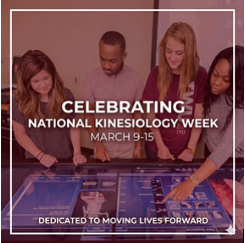
Approved Usage
- Brand Compliant AI graphics
- Uses a screen of the TWU maroon.
- Does not use a TWU logo or official branding
- Uses real TWU photos with graphics added on top.
- Uses the font Montserrat to match the TWU official branding.

Unapproved Uses
- Non-Brand Compliant AI graphics
- Uses an incorrect TWU logo
- The wrong official TWU maroon is used this is too dark.
- Shows fake students, faculty and classrooms.
- Shows false narrative with a medical school in a new location.
- Uses a font that is not brand compliant.
- Shows an inaccurate degree program we do not have.
- Is too busy, does not follow the clean, modern style of the university brand.
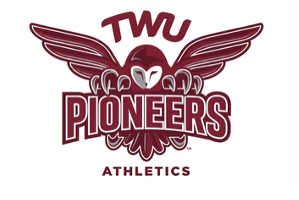
Altered Athletics Logo
- The face of the Owl had been modified
- The fonts have been modified
- The areas of isolation have been violated
- The logo has been modified from the original.
- The colors are incorrect

Altered TWU Logo
- The logo has been modified from the original
- The font has been modified
- The word UNIVERSTIY has not been generated correctly and is misspelled.
- The S of Woman’s is cut off.
- The color is incorrect.
Page last updated 9:45 AM, October 2, 2026