
Poverty simulation helps students focus on patient challenges
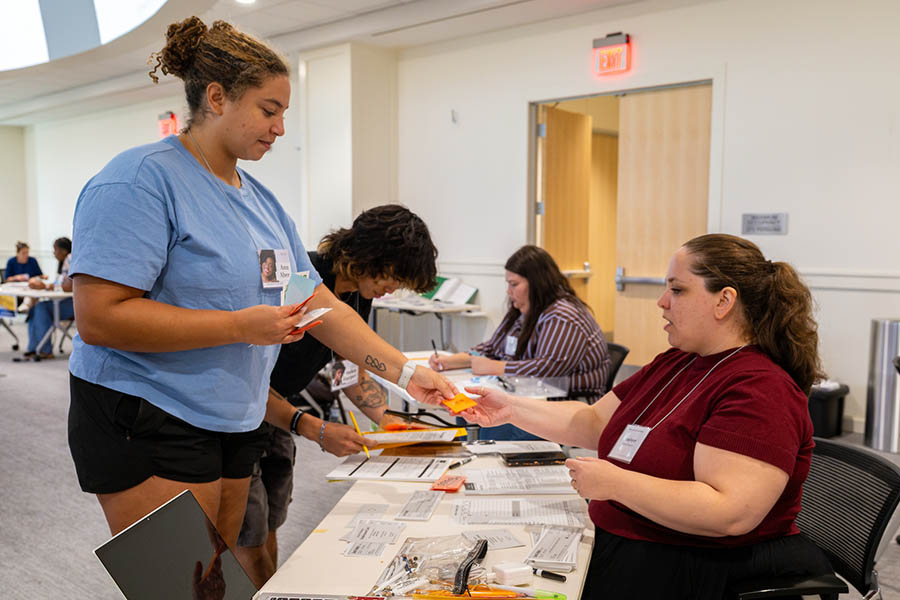
Nov. 2, 2026 — DENTON — For 60 minutes, Texas Woman’s graduate student Kiana Reed walked in someone else’s shoes, not as a healthcare clinician but as a person facing economic upheaval. The Doctor of Physical Therapy student played the role of Anne Aber, a fictional mother working hard to pay bills, hold down a job and care for her husband and three children.
Reed was one of 250 TWU students that participated in the Missouri Community Action Poverty Simulation, an interactive experience that allows students to feel the weight of living with economic hardship.
“You feel that helplessness that a lot of people feel,” Reed said about the experience.
The simulation, held in September, was one of the largest interprofessional education events hosted by Texas Woman’s. Not only with the number of student participants, but also faculty. More than 20 TWU faculty and staff volunteered at each of the four sessions as well as several clinicians from outside the university.
Four sessions were held over two days in the forum, the largest classrooms in the Health Sciences Center, which was designed to advance interprofessional education. Students from various disciplines participated, including some in occupational therapy, physical therapy, speech-language pathology, Spanish translation and undergraduate nursing.
The goal was for students to navigate four weeks of budgeting, family management and transportation in four 15-minute periods. During each period, participants needed to find their way to work or school, pay bills, figure out transportation and find solutions for the unexpected.
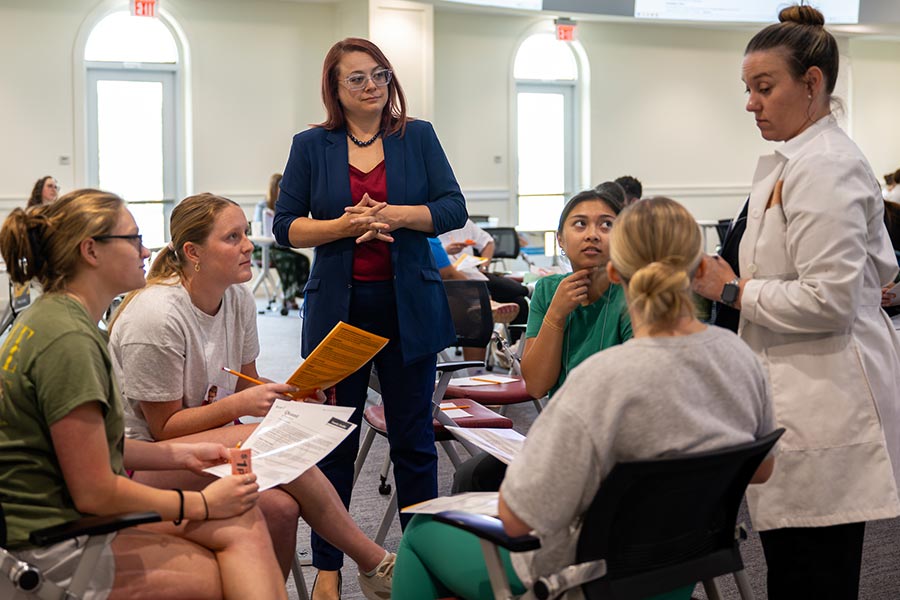
Students were grouped into small family units, assigned roles and given packets of background information. As each session opened, students “visited” designated areas: work, school, daycare, pawnshop. Staff volunteered to play the institutional roles.
Kaelee Brockway, director of Interprofessional Education at TWU, wanted students to experience and manage a complex life that they might not be familiar with.
“Normally, when students participate in simulations or interprofessional experiences, they are playing the role of the clinician, and that was not the case here,” Brockway said. “They were taking on the role of their future patient and attempting to get a deep understanding of what that means for daily life.”
Following the 60 minutes, Brockway led a debriefing session with the students and faculty.
Many students talked about feeling frustrated, helpless and stressed about all the obstacles they had to overcome. They also mentioned that they were not aware of the available resources, such as free childcare and help with rent.
“I think one of the biggest things that was resounding throughout all four runs of the experience was understanding what resources are already available,” Brockway said. “But that it's very, very difficult for the people who need those resources to actually access them or even know that they exist. So understanding the community that you live in and what it offers is a huge first step that I think many of them definitely took from this experience.”
Reed, the DPT student, said she was so consumed with getting to and from work in the simulation that she didn’t have time to find resources to help her situation.
“This definitely opens your eyes to, first of all, wanting to learn about each patient and wanting to learn about all of the things that they go through,” Reed said. “And then also being open and taking initiative for the resources that are available, because there definitely are a lot of resources out there, but it's our job to, first of all, learn about them.”
Moving forward, Brockway is planning on holding the simulation on all three campuses.
Media Contact
Amy Ruggini
Digital Content Manager
940-898-3628
aruggini@twu.edu
Page last updated 11:07 AM, November 2, 2026