New research
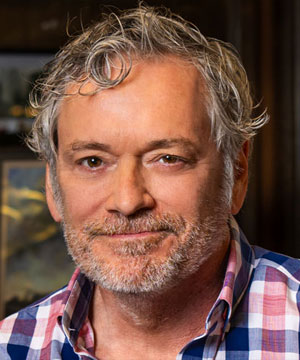
Jonathan Olsen, Political Science
Co-authored the eighth edition of The European Union: Politics and Policies
This rigorous yet digestible introduction to the European Union explains challenges to this powerful institution in times of change. The EU is one of the world's economic and political superpowers, which has brought far-reaching changes to the lives of Europeans and has helped its member states to take a newly assertive role on the global stage. Covers the history, governing institutions, policies, and destabilizing issues such as immigration, the impact of the pandemic, tensions with China, continued Euroscepticism and populism, and the Ukraine war.

Jackie Hoermann-Elliott, English
Co-edited Parenting While PhDing: Surviving and Improving the Working Conditions of Graduate Student Parents
Being a PhD student is not easy. Navigating the highly competitive world of academia while working is stressful for anyone, but especially for graduate students who are also parents. With contributions from more than forty current and former graduate students raising children, Parenting While PhDing offers practical recommendations on childcare and self-care and suggestions to make graduate programs less toxic and more inclusive.

Richard Schuster, Music
Commission and performance of Movement for Pianist & Dancer
Schuster’s project involves the commission and performance of Movement for Pianist & Dancer, a new, interdisciplinary work for piano and dancer. The project will be led Shuster in collaboration with TWU dance professor Jordan Fuchs and Elizabeth Kelly, composer at the University of Nottingham. The work will explore the dynamic exchange between physical piano technique and dance choreography, and its premiere will take place at TWU in spring 2026 on the second Minerva Contemporary Ensemble program in Margo Jones Hall. There is a long tradition of keyboardists accompanying dancers. In Movement for Pianist & Dancer, the pianist will not be the accompanist but rather an equal partner. The physicality of the pianist's movements in performance will serve as the basis for the dance choreography, amplifying the pianist's gestures and developing movement in counterpoint as the work progresses.
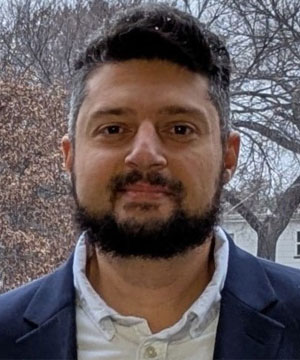
Islam Ebeid, Computer Science
Ebeid's research lies at the intersection of artificial intelligence and the life sciences, focusing on data quality, data engineering and the robustness of foundation models. Specifically, he develops Graph Neural Networks and multimodal AI systems to advance drug discovery, proteomics and medical image segmentation. He leads an NSF-funded project on automated medical image annotation. His mission is to accelerate scientific discovery through ethical, sustainable and human-centered AI systems.

Jessica Gullion, Sociology
Doing Ethnography
Gullion and anthropologist and TWU adjunct faculty member Susan Harper wrote Doing Ethnography, a primer of methodological guidance and stories to illustrate what ethnography looks like in practice. The book helps scholars develop a research question, plan and conduct fieldwork, and deal with common pitfalls. It covers organizing and analyzing data, using techniques from grounded analysis to poetic inquiry. The text follows the arc of a typical ethnographic study, with ethics and social justice concerns highlighted throughout.

Gabrielle P.A. Smith, Psychology
Smith’s research sits at the intersection of social psychology, Black psychology and community-engaged scholarship. Her work examines how structural inequality, regional context and cultural identity shape psychological and physical well-being among Black communities in the U.S. South. Central lines of inquiry explore health, work outcomes, embodiment and hair as cultural and political sites, examining how grooming practices, beauty norms and hair-related experiences intersect with stress, identity and well-being. Her research emphasizes lived experience, collective resilience and the translation of theory into community-relevant insight.
2025 Summer grants
The CAS Summer Research Grant program provides up to $5,000 to purchase materials, fund equipment or travel, support a graduate research assistant or replace summer salary. Highly competitive, the awards are made via faculty applications each spring.

Ann Wheeler, Mathematics
Using digital curricula to enhance teaching mathematics
Explores using digital curricula (DC) in elementary classrooms and its impact on teaching practices, particularly in mathematics. With the increasing adoption of DC, concerns have emerged about teacher preparedness in managing its implementation. Wheeler and three colleagues from Ohio and Oregon received a five-year US Department of Education grant to create a website featuring videos of elementary teachers using DC and interviews discussing teaching philosophies. Reports from teachers about using DC in the classroom were obtained. Unfortunately, the federal grant was terminated in February 2025 due to recent funding cuts. However, Wheeler continues to gather data and analyze it, along with feedback from future teachers who watched video clips from the website. The research questions for the summer work would focus on how the website supports future teachers in integrating DC into their classrooms and how current teachers feel DC impacts their mathematics teaching. The goal is to publish the findings in a mathematics education journal.
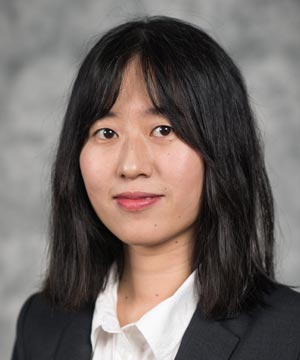
Shiru Lin, Chemistry and Biochemistry
This project aims to harness convolutional neural networks (CNNs) enhanced with patch cropping and multimodal training techniques to detect key properties of two-dimensional materials and their catalytic performance. The approach includes generating image patches encompassing grayscale and color information, augmenting the dataset and improving model robustness.

Marta A. Mercado-Sierra, Social Work
Using technology in social work education: a systematic literature review
Explores use and effectiveness of technology, particularly educational software, and virtual and augmented reality technologies and adaptive learning platforms. The review is grounded on the Preferred Reporting Items for Systematic Reviews and Meta-Analyses guidelines. The first three phases using the same 14 databases for academic articles and dissertations published from March to December 2024. The fourth phase will assess the quality of the studies and explore the effectiveness of TTs.

Lionel Faure, Biology
Elevating plants lipid droplet production to generate energy-rich biomass
Explores innovative genetic strategies to enhance lipid accumulation in vegetative tissues such as leaves to boost biofuel production. The research aims to support the transition from fossil fuels to sustainable, clean energy sources by increasing plant-based lipid yields. The research will investigate:
- lipid extractions of transgenic plants created in the lab to compare their lipid profile
- transcriptome impact of the expression of the new genes on transgenic pants, focusing on genes involved in lipid pathways
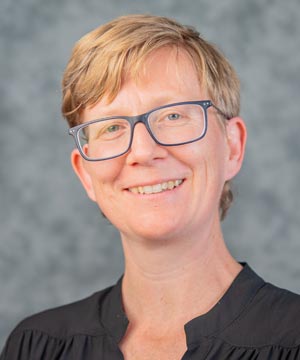
Stina Soderling, Multicultural Women's and Gender Studies
Soderling awarded Visiting Fellowship at CSSM
Housed at the University of Helsinki, Finland, the Centre for the Social Study of Microbes (CSSM) is a hub for social scientists and artists conducting research on human-microbial relations, and aims to develop theory and methods to better make sense of the complex relations between humans, nonhumans, microbes and their environments. Researchers associated with CSSM work on topics such as antimicrobial resistance, the role of custodial labor in preventing hospital infections, contemporary artisanal sake brewing and feelings of care and disgust for yeasts and bacteria. To learn more about the CSSM, visit https://www.socialmicrobes.org/

Zane Lybrand, Biology
TWU lab receives dual research awards advancing brain science
The Lybrand Lab in TWU’s Division of Biology has been awarded grants to advance brain research.
A $133,000 award from the DLG4SHINE Foundation will expand the lab’s use of brain organoid models to better understand DLG4-associated neurodevelopmental disorders, also known as SHINE syndrome. SHINE (Synaptic, Hypotonia, Intellectual disability, Neurodevelopmental delay, Epilepsy) is a rare genetic condition caused by changes in the DLG4 gene, which plays a crucial role in forming and stabilizing synapses, the connections that allow neurons to communicate. Children with SHINE often experience developmental delays, low muscle tone and seizures. This project builds on data generated by graduate researcher Preetika Karmacharya through a TWU REP award, which laid the groundwork for modeling these conditions in patient-specific pluripotent stem cells.
In collaboration with Sciperio, the lab also received a $100,000 Department of Defense award for Organoid Research and Automated Characterization for Live Electrophysiology (ORACLE). This Phase I effort focuses on developing human cerebral organoid cultures at TWU and integrating them into Sciperio’s automated, high-throughput platform with microfluidic chips and biosensors to study military-relevant trauma responses.
2024 summer research grants
Adesola Akinleye
Islam Akef Ebeid
Alexis Hardesty
Charmian Wells
Sierra Mendez
Shiru Lin
Page last updated 3:10 PM, January 12, 2026