1901-1929
1901
The bill to establish an institution for industrial training for girls is passed by the twenty-seventh Legislature.
1902
The Locating Commission, appointed by Governor Joseph D. Sayers, selects Denton as the location for Girls Industrial College.
1903
Girls Industrial College opens with an enrollment of 186 students.
$200 is budgeted for Physical Culture equipment. Department of Elocution, Physical Culture and Music offer classes in Physical Culture under the instruction of Jessie McClymonds from Emerson College of Oratory, who joins the inaugural faculty. “Natural expression will be cultivated [through] gesture; drill in the easy and natural use of the physical agents of expression in obedience to the mind” [quote unattributed]. Courses included Physical Culture with “exercises for cultivation of the muscular sense and for the promotion of harmony, grace and unity.”
1905
Name of institution is changed to College of Industrial Arts (CIA). Miss S. Justina Smith, Emerson College of Oratory, is hired to teach music, elocution and physical culture.
The concept of “Literacy education” and a curriculum for “young women [based] upon the broad lines of cultural and practical education” as taught by the “best colleges of the State,” is supported in the face of criticism that CIA was authorized only as a college dedicated to industrial arts [Quote unattributed]. Expansion of the liberal and performing arts is encouraged as a way of demonstrating a broad liberal arts curriculum.
1906
The Emerson system is emphasized with the Swedish System of Educational Gymnastics in Physical Culture Classes for the cultivation of grace, ease of manner, unity and harmony.
1907
Courses in Physical Culture are required of all preparatory, first- and second-year regular students. May Day festivities include Maypole dances accompanied by the Denton band; Classic Greek-styled dance and tableaux highlight a Greek festival and is termed “the most beautiful entertainment ever given at the College” [Quote unattributed].
Physical Culture classes cited as a characteristic feature of studies at CIA.
/prod01/twu-cdn-pxl/media/images/dance/physicalculture.jpg)
1908
The courses of study and range of subjects “give culture of the highest order” with an emphasis on “intellectual culture…enhanced by experience.” When three courses in expression are added, the aim is to “cultivate natural powers of expression” through imagination, concentration and “continuity of thought” [Quote unattributed].
There is discussion about providing a new classroom for Physical Culture classes which have previously been held in the auditorium.
/prod01/twu-cdn-pxl/media/images/dance/2-auditorium.jpg)
1911
An attempt to begin the Dancing Club lasts only one week. Students attempted to form this club without proper approval or a faculty sponsor, so it was disbanded.
1912
Chaparral Dance in October depicts a Romani camp and opens with an elaborately designed grand march.
In a faculty meeting addressing student body welfare, Justina Smith advocates for teaching students more new dances so that they are encouraged to socialize more with each other.
1913
When faculty request a “faculty house,” Board of Regents advise against using the house for public dances. Despite the recommendations, the Thanksgiving and Christmas dinners, with social dancing, are the highlight of the year’s social life.
1914
Curriculum for systematic physical training is defined as folk-dancing, rhythm and coordination, physical grace and ease.
Miss Corinne L. Paine added to faculty.
New Gymnasium built north of Stoddard Hall “as a result of the demand for better opportunities for physical training” [Quote unattributed].
1915
Physical Training department welcomes its first two student assistants, Catherine Wisdom and Mary Fields.
/prod01/twu-cdn-pxl/media/images/dance/3-folkdancing.jpg)
1916
Aesthetic and interpretive dancing added to the curriculum of physical training.
1917
Associate professor Gertrude Helmecke becomes Director of Physical Education.
Eliza I Morgan added to faculty.
1919
Professor Alice Arnold becomes Director of Physical Education.
1920
Vera B. Haines and Alta Randels added to faculty.
1921
Main Auditorium is completed, seating 2,500. New Gymnasium is built as enrollment and course offerings in the Physical Education Department continue to grow. Scope of the College is refined “to provide mental discipline, social structure, industrial efficiency and spiritual vision and outlook” [Quote unattributed].
Jeanne Foresman voted best dancer by the Daedalian.
In the following two years, physical education sequence added: Aesthetic Dancing (practice in technique, national character dances and solo and group aesthetic dances), Corrective Gymnastics, Physiology.
/prod01/twu-cdn-pxl/media/images/dance/4-gymnasium.jpg)
1922
Faculty members Evelyn Kendrick, Mississippi State College for Women, Margaret Bogart, University of Missouri and Vendla Holstrom, Posse School of Physical Education, revise the physical education and training program to promote health and vigor, train correct posture, cultivate bodily control and poise and furnish wholesome recreation. Two years of elective Aesthetic Dancing classes are joined by Corrective Gymnastics, a senior course including folk dancing, interpretive dancing, gymnastic dancing, clog and athletic dancing.
College of Industrial Arts is the first college in Texas to establish a Bachelor of Science in Physical Education.
1923
No state funds are allocated for Physical Culture classes.
Courses in Kindergarten Education include work in rhythmic play to foster the “child’s imagination and his desire to interpret for himself the experience in life…aesthetic and social instincts” [Unattributed quote].
1924
Helen Webb, Columbia University, Elizabeth Furber, Columbia University, and Marion Rowland Roberts, Columbia University and College of Industrial Arts, join the Physical Education faculty. First accompanist is hired. Courses added for preparing teachers for elementary and secondary education. Curriculum includes Anatomy, Kinesiology, Aesthetic and Interpretive Dancing, Folk Dancing and Gymnastics. Three student assistants added.
Elizabeth Burchenal, founding president of American Folk Dance Society, spent two days at the College of Industrial Arts teaching folk dance to several hundred students.
1925
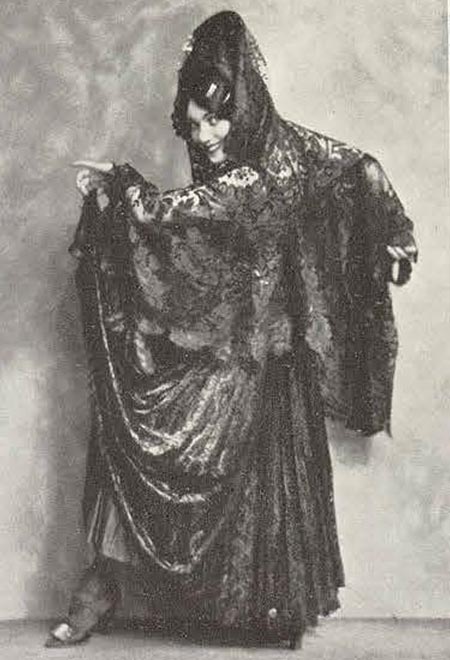
Two years of courses titled Aesthetic Dancing changed to Natural Dancing. Related dance courses retained dance requirement for PE majors and all freshmen and sophomores: rhythms, technique, folk dances, clog dancing and School Festivals (content and procedures for school entertainments, festivals, demonstrations that are drawn from interdisciplinary subject matter. Practical experience given with the annual May Fete). Modern versions of colonial and Russian folk dances are staged.
/prod01/twu-cdn-pxl/media/images/dance/5-russianfolkdance.jpg)
1926
College enrollment tops 2,600. Mission includes the statement: “Professional knowledge and skill are of small value without an adequate academic foundation and an extensive cultural background.”
1927
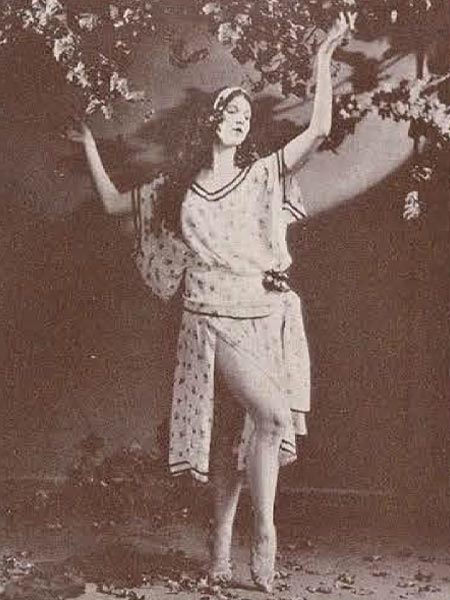
Course titles liberalized to generic Dancing to include fundamental rhythms, relaxation work, clog dancing, natural dancing and folk dancing. Of the required six quarters of physical education, two quarters are devoted to dancing. Required PE major curriculum includes School Festivals and six quarters of Natural Dancing.
1927 Daedalian states that the dance classes at CIA “have always attracted a larger group than any other phase of the physical education work” which is largely attributed to “the variety of instruction offered which includes clog dancing, natural dancing and folk-dancing.”
Current faculty: Elizabeth Furber (director), Mary Agnes Murphy, Marion Roberts, Leah Barnes, Florence Hupprich and Hazel Richardson.
Doris Niles, solo dancer, accompanied by Louis Horst are the first guest dance artists to perform at CIA.
/prod01/twu-cdn-pxl/media/images/dance/7-naturaldancing.jpg)
1928
Denton grows to a population of 12,000. Shift from quarter to semester credit system. Dance requirement for students reduced to one semester of Dancing. Students may elect advanced courses from elective and theory courses required for the PE and Health degree: History and Philosophy of the Dance, Natural Dancing (two semesters), Folk Dancing and Advanced Folk Dancing. Sylvia Tell, guest solo dancer, performs with “unusual grace.”
1929
Significant changes to the dance curriculum: Department changed to Physical and Health Education. Course in School Festivals eliminated. Sara Craddock (pianist) added to staff. Stock Market Crash thrusts the US and world into Depression. Department takes advantage of the popularity of folk and natural dancing by prioritizing them and other dance classes in its list of required subjects for the two-year PE requirement. A Dancing Club managed by Mary Virginia Williams is offered for Women’s Athletic Association (W.A.A.) credit; instruction given in natural and clog dancing. The season climaxes with a “dance drama” performance.
/prod01/twu-cdn-pxl/media/images/dance/9-dancedrama.jpg)
Page last updated 11:26 AM, August 7, 2025