OTD student’s project uses fantasy to sharpen social skills
/prod01/twu-cdn-pxl/media/images/occupational-therapy/Stevens_Jeremiah_900.jpg)
April 24, 2026 — DENTON — Picture this: A group of friends are walking on the docks of a busy port. Out of nowhere, a gnome bumps into them, then drops several crates. The group is covered in a sticky slime that oozed from the broken containers. The gnome apologizes profusely and worries that she’ll be fired over the mishap and for failing to complete other tasks.
Will the group of friends, dripping with slime, come to the gnome’s aid?
If it sounds like something straight out of a fantasy, it is.
In this role-playing game, participants have to decide whether they will help the clumsy gnome. Oh, and along the way they also must fight giant rats and encounter a grumpy admiral who is distraught over his missing spyglass.
The entire scenario is taken from “Down at the Docks,” a Dungeons & Dragons adventure adapted by Jeremiah Stevens, a Texas Woman’s occupational therapy doctorate student.
For his capstone project, Stevens examined how Dungeons & Dungeons, a table-top game in which players create characters and navigate fantasy worlds, can improve social and emotional learning of 10-12 year olds.
“The amount of things that a typical session of playing Dungeons & Dragons requires from you as a person is all the stuff that you would want a kid or an adult to be able to do anywhere else,” Stevens said. “So, being able to take leadership and solve problems.”

Stevens spent his afternoons during the spring semester volunteering at the Boys & Girls Club in Cedar Springs. After a few hours of playing basketball and volleyball and helping with homework, Stevens would serve as the Game Master, which is the referee and storyteller for a modified, shortened D&D game with interested youths.
The capstone project is an opportunity for TWU OTD students to dive into an area of interest and work with a community partner to benefit its population through occupational therapy techniques.
There were 138 capstone projects across the TWU Denton, Dallas and Houston campuses this spring semester. All were student-driven and unique, but Stevens’ project might take the prize for being the most out of this world.
“I loved the idea,” said Lisa Griggs-Stapleton, faculty mentor and doctoral capstone coordinator. “I thought the kids would engage with it immediately, and as a faculty member, it's great when a student comes with a project that's really in their heart.”
Stevens started playing D&D a few years ago when he first started OT school. In D&D, you create a backstory for your character. Stevens’ character was a monk who had been a soldier in the medieval army and was seeking a peaceful existence. His intent was to create someone that would be cool and fun to play.
Over time, he realized that he unintentionally created a character that paralleled his own life. Stevens had served in the army as a paratrooper.
“So it ended up being really cathartic,” Stevens said about the game.
He wondered if there was research on the therapeutic benefits of role-playing games such as D&D. At the same time, his professors were reminding students about the upcoming capstone project. He realized that a project centered on D&D would be really interesting for him.
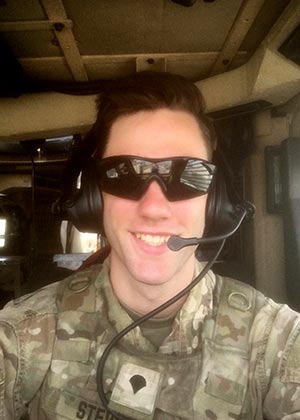
After brainstorming ideas with Griggs-Stapleton, they landed on the social-emotional learning aspect of D&D and that ended up fitting really well with the Boys & Girls Club afterschool program.
“Because kiddos just in general, it's a huge part of their curriculum to try to teach social emotional learning and not solving problems by aggression or shoving people or name calling or bullying,” Stevens said.
Moreover, Stevens observed numerous positive developments while serving as the Game Master every afternoon to the steady group of young people that sat down to play with him.
First of all, the pre-teens had fun. One told Stevens after his first game that he was going to buy a wizard costume. Instead of going to the computer room, another quiet boy started joining the D&D games regularly. As Stevens’ hour-long adventures became a little more complex, the groups were talking more amongst themselves about what decisions they should make.
Many times, they were silly.
“I keep it kind of goofy and fun anyways,” Stevens said. “You can play D&D very seriously, and some people enjoy doing that, but even as an adult, I enjoy the more fantasy and fun aspects of it.”
After three months, Stevens says it will be tough to leave.
“I really enjoyed these kiddos, and they're really sweet and special,” he said. “I look forward to going to the Boys & Girls Club every day.”
He is leaving behind his D&D toolkit with the hope that the youngsters continue to play and that future OTD students will build on his project.
Media Contact
Amy Ruggini
Digital Content Manager
940-898-3628
aruggini@twu.edu
Page last updated 10:51 AM, April 27, 2026