Guided by grief, OT prof pens book about son’s mental illness
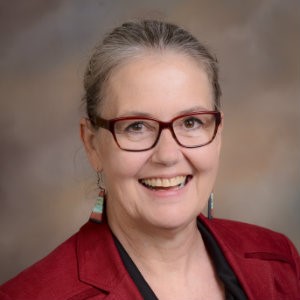
March 27, 2026 — DENTON — For seven years, Claudette Fette toiled on a book about her son. Her son, Aaron, passed away in 2017 after living with mental illness throughout his life.
Fette worked through her grief as she wrote No Saints Here: A Cautionary Tale of Mental Illness, Health, and the Cost of Ignorance in the Lone Star State. It was published in 2025 by Stoney Creek Publishing Group.
“It does feel somewhat vulnerable because it is our story – good, bad and ugly,” said Fette, PhD, a clinical professor at Texas Woman’s. “Raising him was the reason I became an OT. I was a happy little artist doing my thing and completely satisfied with that until everything we tried to help Aaron failed and he ended up on the streets.”
After Aaron’s death, Fette inherited three boxes of his writings. She transcribed his parts and then went back to her old journals to write her chapters about her experience as Aaron’s mom. The final part of the book explains evidence-based alternatives from Fette’s years working in mental health as both an occupational therapist and an advocate.
“Every chapter starts with some poetry that he wrote and then his telling of his experience from early childhood, school age, the trauma he experienced at Straight Inc., and his subsequent life on the streets and as it moves through his life,” Fette said. “And then my voice in each of those same time periods, and then evidence-based practice walking through all of his life.”
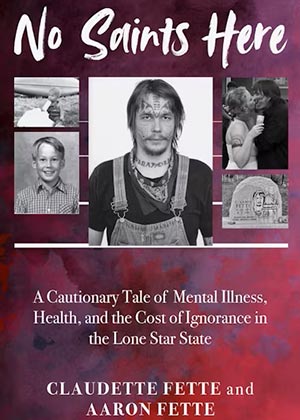
Aaron ended up living on the streets at 15 after struggling in school, experiencing ineffective therapies and enduring an abusive treatment center. Desperate for something different and wanting to help families with similar hardships, Fette decided to go to occupational therapy school.
Fette found a perfect partnership with occupational therapy, partly because of its long history of working with people with mental illness and partly its focus on providing accommodations for living life.
Fette sat in the front of her classes, asking question after question. In the end, she realized that her son didn’t need fixing. But she did want to be part of a solution.
“He was never broken,” Fette said. “It's just who he was. And a lot of the damage that he went through was damage that we put him through trying to fix it.”
Having a relationship with her son was more important than him being successful in the conventional sense. She recalled a six-month period in which she didn’t hear from him. It broke her.
Aaron had connected with a group of homeless youth that would hop on trains and travel around the country. Mother and son talked all the time but it was before cell phones so calls were expensive. Fette came up with the idea of getting an 800 number so he could call as often as he needed to. Sometimes, his friends would call her just because they needed someone to talk to.
“If Aaron was not doing well, he might call five or six times in a day,” Fette recalled. “I was going to stay connected to him no matter what.”
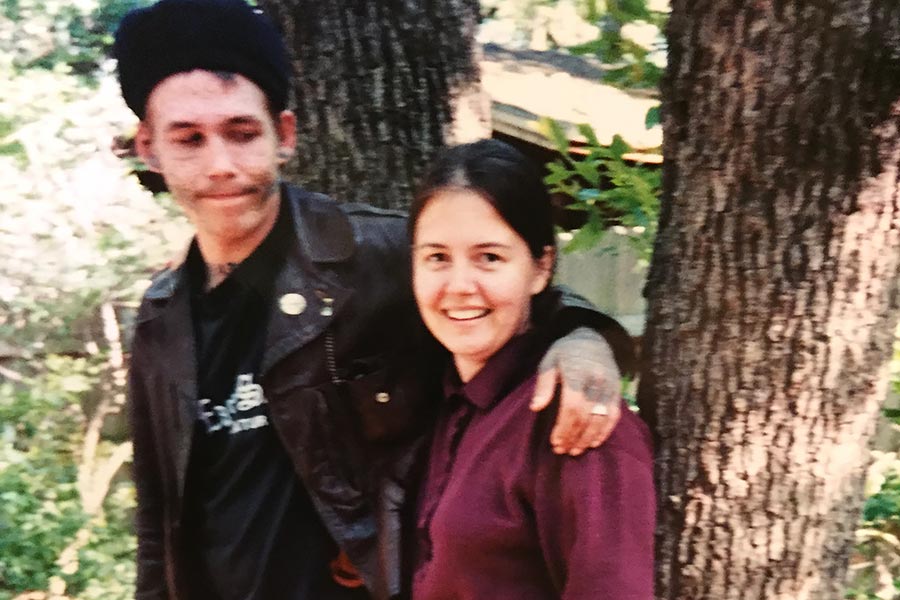
Aaron was a skilled writer and had been working on his memoir for nearly 10 years before he died of a drug overdose. His motivation was getting the word out about abusive facilities and how to differentiate from valid treatment. Fette also wanted to reach families.
“Part of the motivation for writing the book was for them to see me not as a PhD professor, occupational therapist, but as someone who was a teenage mom who didn't always make the best decisions,” Fette said. “I want families to be able to see themselves and to more easily understand what seem like complicated theories because they are applied to our lives.”
Fette worked in mental health for more than 20 years in a variety of settings: acute psychiatric hospital, homeless shelters, schools and community practice.
“What became apparent to me was I was not going to change the world as one little person trying,” added Fette, who has taught occupational therapy at TWU for 14 years. “But teaching, I can infect this whole group. I think I've probably taught 500 students at this point and given them strong mental health skills.”
Publishing the book didn’t end Fette’s grief.
“Grief will always live with me. And that's okay. I don't want to not miss him.”
Media Contact
Amy Ruggini
Digital Content Manager
940-898-3628
aruggini@twu.edu
Page last updated 3:13 PM, March 27, 2026