After groundbreaking research on walking, her next step was leadership
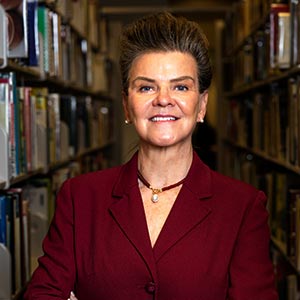
Oct. 9, 2025 — DENTON — For 15 years, Catrine Tudor-Locke was a typical professor in many ways. She dutifully taught classes, published research and gave presentations. But what set Tudor-Locke apart from her peers was that she went the extra mile.
Or, in her case, Tudor-Locke walked the extra mile. And if you asked her, that is approximately 2,000 steps.
Tudor-Locke is internationally recognized as a walking behavior researcher, perhaps best known for her work addressing “how many steps/day are enough?” She has published more than 330 articles in physical activity-related journals. She was the first to research cadence as a marker of intensity. And she has traveled all around the world, delivering over 85 invited academic presentations.
But after numerous accomplishments in her field, Tudor-Locke realized that she wasn’t getting that same joy as when her career first launched.
“Call it midlife crisis or what have you,” Tudor-Locke said. “I had robust and very steep success in a specific area. But then after a while, it just seemed I knew the recipe, I knew how to make the sausage and it didn’t seem to be as fulfilling as it once was.”
She did some introspection on what the next chapter in her life would look like. How did she get that next buzz? She realized that mentoring brought her joy and so she set her sights on a second career in administration and leadership.
“I'm interested in accomplishing something else, the next thing, and giving back and helping others achieve and making sure that we're preparing the next generation,” Tudor-Locke said. “That's where I find my purpose.”
Her first step in the leadership arena began as a chair and then an associate dean at the University of Massachusetts Amherst. Most recently, she was the dean of the College of Health and Human Services at the University of North Carolina at Charlotte before being named the dean of Texas Woman’s College of Health Sciences in July.
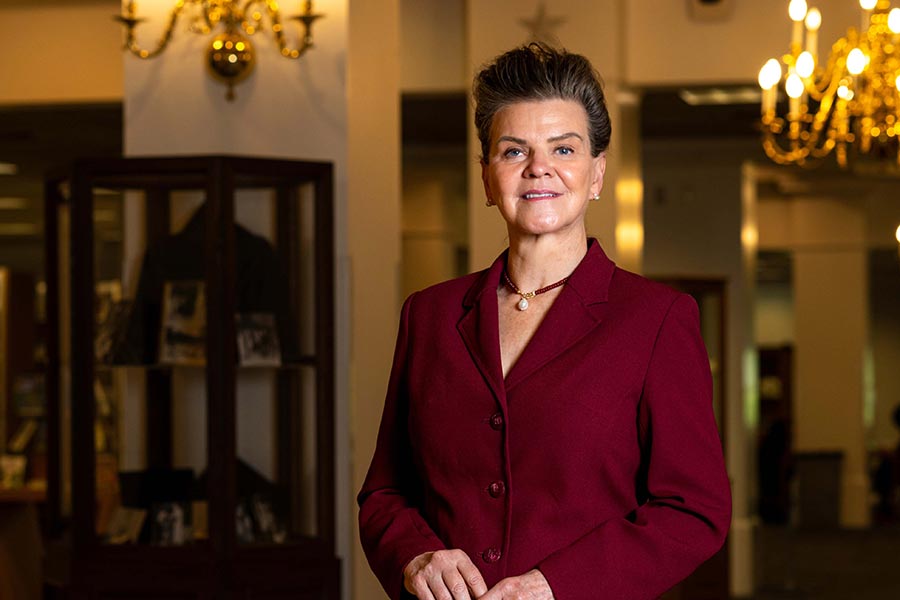
TWU’s purpose to “educate a woman, empower the world” deeply resonated with her.
“This seems like an opportunity that would just make my life a little bit more extraordinary,” she said.
Tudor-Locke spent her first few weeks at Texas Woman’s observing and getting to know her faculty and staff.
“I'm very much into team-based leadership,” Tudor-Locke said. “I want to assemble people around me who are capable and allow them to shine and show off what they can do too, like a team of leaders.”
She is still involved in walking research but does it more collaboratively. She was published as recently as 2024 and is a sought-after media expert.
In July, she talked with BBC Radio 4 about a recent meta analysis that found walking 7,000 steps per day significantly reduced risk for chronic disease compared to 2,000 steps. And, in August, she was interviewed by National Geographic for a story about different walking trends and styles.
“On the face of it, walking, very simple, but the science on walking is still evolving,” Tudor-Locke said. “We're still studying it. And everybody loves to walk.”
Tudor-Locke’s introduction to the scientific study of walking began in the 1990s when she was looking for a way to promote physical activity for people with type 2 diabetes in ways that were less structured.
“During my PhD training up in Canada, one of my mentors showed me an article from Japan about pedometers,” said Tudor-Locke. “And I went, ‘that's it.’ My head blew off. And that was the first English language article from Japan on pedometers. And then I just ran with it from there, did my dissertation in it and like I say, launched a whole career.”
As the use of pedometers and other types of step-counting devices exploded, Tudor-Locke’s research on step counting and parameters on how to use the new technology was in demand.
“I talked about the devices being hardware, and what I was doing was the software,” Tudor-Locke said.
Tudor-Locke worked diligently to make her research evidence- and data- based. Most importantly, she wanted to have a simple message.
“I always joke that it takes a lot of effort to make something simple, but that's why I focused on step counting and now cadence tracking as ways to communicate healthful physical activity to the grand majority who are ambulatory and maybe don't do sports,” Tudor-Locke said.
Now, Tudor-Locke wants to dedicate her time and focus to Texas Woman’s and the faculty and staff at the College of Health Sciences.
“This is my next chapter, and perhaps the one I will find to be the most fulfilling,” she said.
Media Contact
Amy Ruggini
Digital Content Manager
940-898-3628
aruggini@twu.edu
Page last updated 8:09 AM, October 13, 2025